Field note
Picture the moment it has to earn its place.
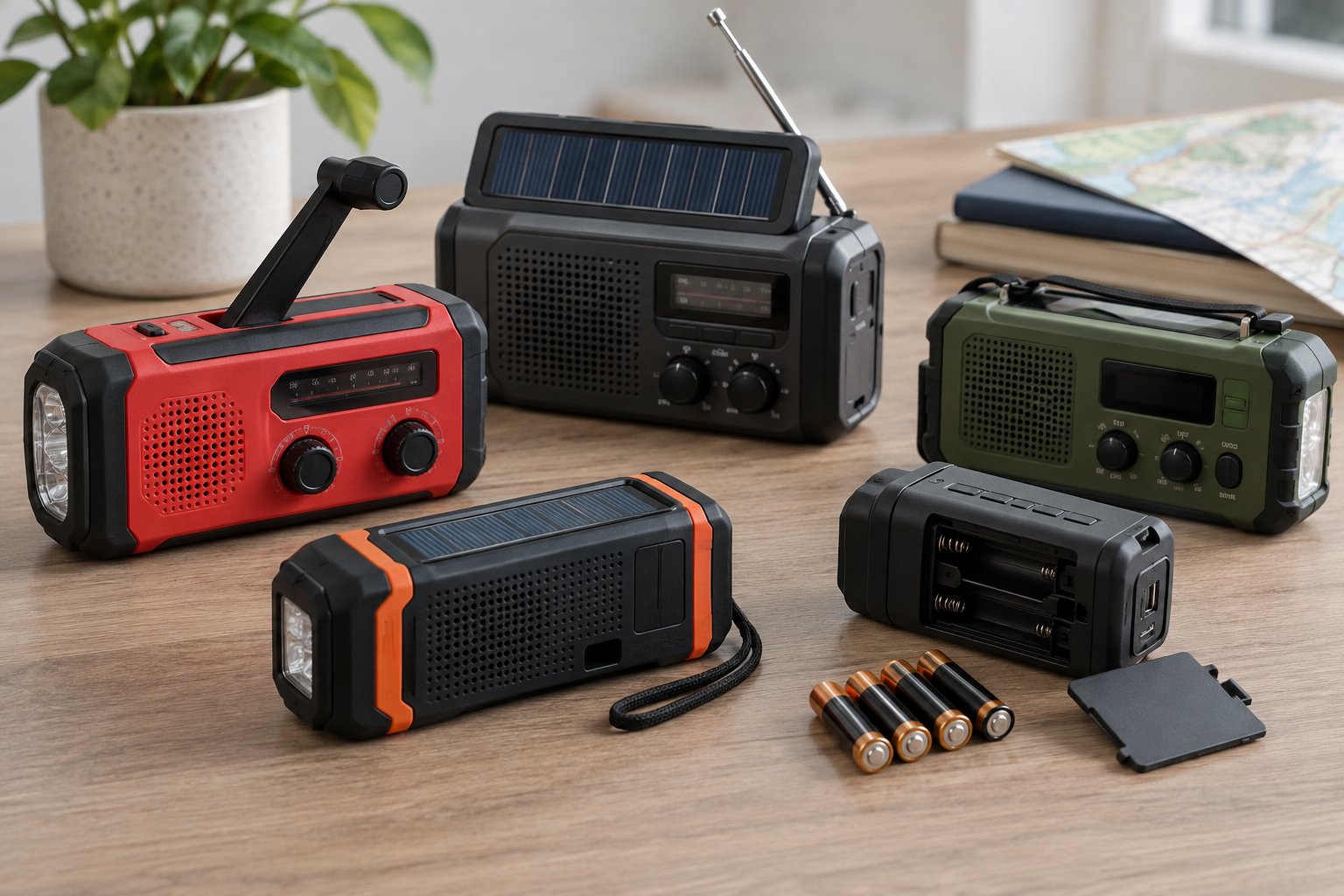
Picture a long travel day with one outlet, a low battery, a crowded bag, and no patience for cable puzzles. That is the useful starting point for emergency weather radios: choose power and reception before extras: not the brightest claim on the box, but the ordinary moment when fit, reach, noise, speed, or convenience either helps—or gets in the way.
“Prioritize dependable local weather reception and a realistic battery plan before counting secondary charging ports or survival-themed extras.”
Our view is based on published specifications, manufacturer documentation, and category research. Where we have not performed hands-on testing, we do not imply that we have.
Signals worth noticing
The details that change the experience
- 01NOAA reception varies by location and building
Confirm how this works in your exact setup. The specification matters only when it supports the task you repeat most often.
- 02Alert standby behavior differs from ordinary listening
Confirm how this works in your exact setup. The specification matters only when it supports the task you repeat most often.
- 03Solar panels on small radios provide limited input
Confirm how this works in your exact setup. The specification matters only when it supports the task you repeat most often.
- 04Replaceable batteries add resilience when stored correctly
Confirm how this works in your exact setup. The specification matters only when it supports the task you repeat most often.
Day two matters more than unboxing day
Think past setup. Where will it live? What gets charged, cleaned, routed, updated, emptied, or stored? Those small ownership steps decide whether a product becomes part of the routine. For this category, access and upkeep deserve the same attention as headline performance.
The strongest fit is usually for first-time preparedness kits and campers who also want a home backup radio. Anyone outside those scenarios should be especially strict about dimensions, compatibility, and return terms.
The deeper read
Emergency weather radios in context
A closer observation reveals four ownership details that are easy to miss in a showroom or marketplace listing.
Capacity is not energy delivered
Charging involves conversion losses, device limits, cable limits, and heat. A capacity printed on a battery does not translate directly into the same amount reaching a phone or laptop. Use it to compare broadly similar products, then check supported output standards, port behavior, and whether multiple devices share the available power.
Carry comfort is a real feature
A travel product is handled more often than it is admired. Weight, thickness, connector position, cable storage, grip, and balance can matter more than an extra mode. Sketch the actual carry system: pocket, purse, backpack, airport tray, café table, or bedside outlet. The right design should fit that sequence without creating another loose object to manage.
Heat and batteries deserve respect
Lithium-powered gear should be used, charged, stored, and transported according to current manufacturer guidance. Stop using damaged or swollen batteries. Confirm airline rules before travel, keep ports protected from debris, and use cables rated for the required power. Fast charging is valuable only when the whole chain supports it safely.
Ecosystems can narrow the choice
Magnetic alignment, finding networks, companion apps, connector types, and operating-system features may tie a product to one device family. That can make everyday use smoother, but it also reduces flexibility when a phone or laptop changes. Decide whether the convenience is worth the lock-in before treating ecosystem integration as an automatic advantage.
Turn the guide into a shortlist
A buying guide should reduce the field, not encourage endless comparison. For emergency weather radios: choose power and reception before extras, start with three non-negotiables: the environment it must fit, the primary task it must complete, and the ownership burden you will accept. Remove every option that fails one of those conditions before looking at premium features. A shortlist of two or three well-matched products is more useful than a ranking of ten products built for different people.
Next, write one sentence for the compromise attached to each finalist. Perhaps the smallest option needs more frequent batches, the wireless option gives up some efficiency, or the higher-output model occupies more room. When the compromise is explicit, the choice becomes personal in a productive way. You are no longer asking which product is best in the abstract; you are deciding which drawback will appear least often in your routine.
Before checkout, confirm the precise model, included accessories, seller identity, regional warranty, delivery and return terms, and the latest manufacturer instructions. Save important compatibility information when it affects the decision. If a safety, electrical, food-contact, charging, installation, or vehicle requirement applies, the current official instructions take priority over a general guide. The last step is permission to wait: uncertainty is a valid reason not to buy yet.
Editor’s bottom line
More features can improve flexibility, but they also add controls and create more functions that must be checked before an emergency.
That is not a reason to dismiss the product. It is the tension to resolve before buying. If the benefit appears in your daily routine and the compromise does not, the choice has a sound foundation.
Product links