Decision lab
Start with the choice, not the feature list.
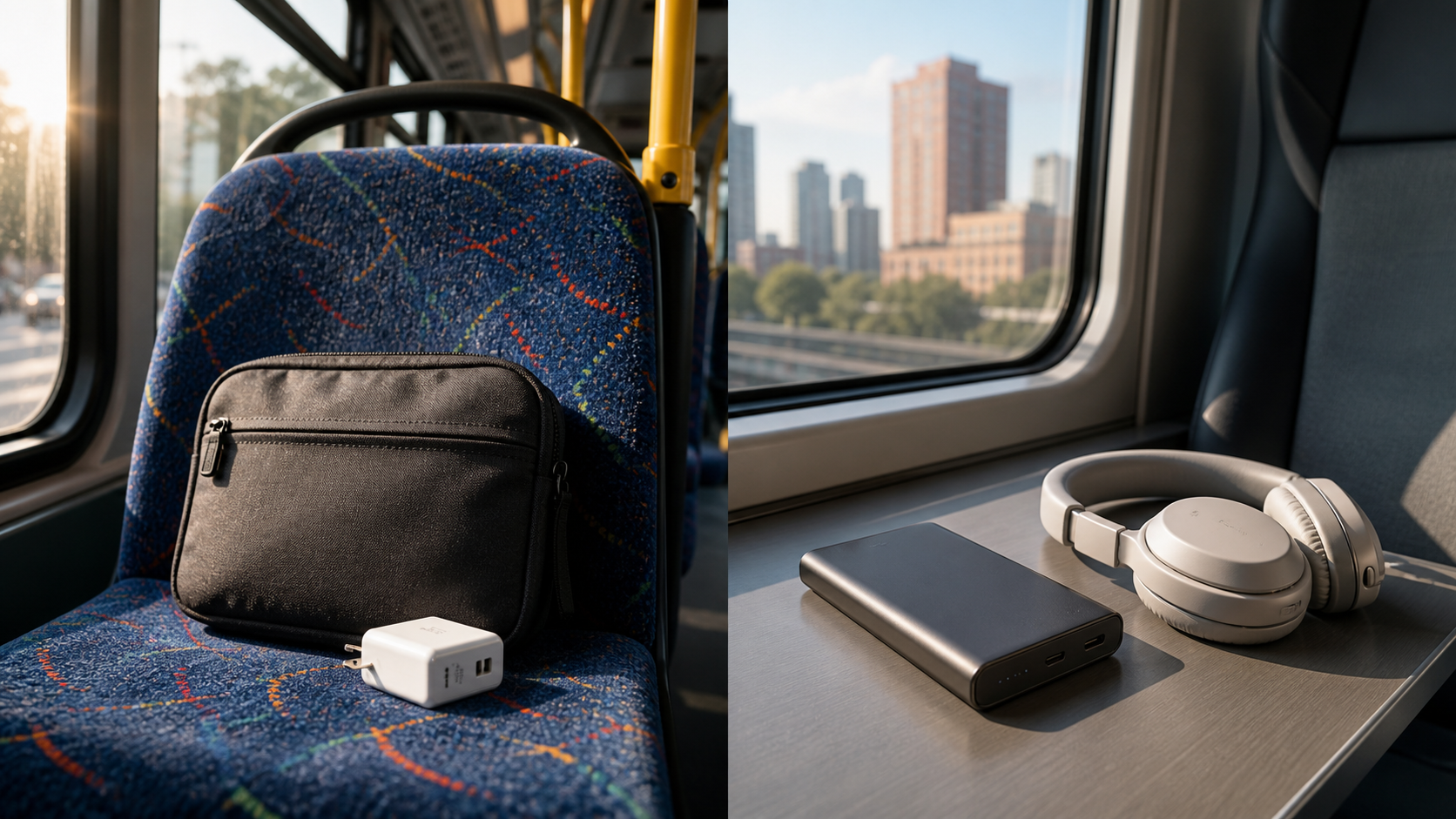
Bus kits should favor secure one-handed access and minimal loose gear; train kits can justify larger batteries and headphones when seat time is longer.
A three-part decision matrix
mixed-mode commuters and people deciding what stays in the daily bag
Map standing and seated portions of the route; Count reliable outlet opportunities.
The main compromise conflicts with the way you expect to use it most days.
Do not score every feature equally. Give the most weight to the requirement that would make the purchase fail: physical fit, device support, usable capacity, comfort, or maintenance burden.
Before checkout
Run these checks in order
- Match the exact model. Similar names can hide different capacities, generations, bundles, and regional versions.
- Measure the environment. Product photography is a poor substitute for dimensions, cable reach, clearance, and storage space.
- Price the complete setup. Include required cables, mounts, filters, batteries, accessories, and recurring supplies.
- Read the return and warranty terms. Marketplace seller terms may differ from the manufacturer’s direct policy.
Our view is based on published specifications, manufacturer documentation, and category research. Where we have not performed hands-on testing, we do not imply that we have.
The deeper read
Bus vs train commute in context
Before assigning a winner, examine four variables that can change the result of the comparison.
Capacity is not energy delivered
Charging involves conversion losses, device limits, cable limits, and heat. A capacity printed on a battery does not translate directly into the same amount reaching a phone or laptop. Use it to compare broadly similar products, then check supported output standards, port behavior, and whether multiple devices share the available power.
Carry comfort is a real feature
A travel product is handled more often than it is admired. Weight, thickness, connector position, cable storage, grip, and balance can matter more than an extra mode. Sketch the actual carry system: pocket, purse, backpack, airport tray, café table, or bedside outlet. The right design should fit that sequence without creating another loose object to manage.
Heat and batteries deserve respect
Lithium-powered gear should be used, charged, stored, and transported according to current manufacturer guidance. Stop using damaged or swollen batteries. Confirm airline rules before travel, keep ports protected from debris, and use cables rated for the required power. Fast charging is valuable only when the whole chain supports it safely.
Ecosystems can narrow the choice
Magnetic alignment, finding networks, companion apps, connector types, and operating-system features may tie a product to one device family. That can make everyday use smoother, but it also reduces flexibility when a phone or laptop changes. Decide whether the convenience is worth the lock-in before treating ecosystem integration as an automatic advantage.
Build a fair comparison
A useful comparison keeps the job constant while the products change. With bus vs train commute: how your tech needs change, begin by writing one sentence that describes the routine to improve. Then compare each option at the same capacity, connection state, accessory level, and operating condition wherever possible. If one alternative is judged at maximum performance and another in a battery-saving or shared-power mode, the table may look tidy while the conclusion is misleading.
Separate thresholds from preferences. Compatibility, physical fit, safety requirements, and enough capacity to complete the task are thresholds: an option either clears them or leaves the shortlist. Color, small differences in weight, app extras, and secondary modes are preferences. Do not let a pile of preferences compensate for a failed threshold. This simple rule prevents the candidate with the most checkmarks from winning despite being wrong for the setup.
Finally, compare the complete cost at a normal selling price, not only the most attractive promotion visible today. Include required cables, mounts, cases, consumables, subscriptions, and replacement parts. If the result changes only because one item is temporarily discounted, record both conclusions. The better long-term choice should remain understandable after the sale ends.
Bus kits should favor secure one-handed access and minimal loose gear; train kits can justify larger batteries and headphones when seat time is longer.
Buy only when the winning side of the matrix describes your real routine—not an occasional edge case.
Product links