Research-led product guide
GOOLOO GP4000 Jump Starter: the answer in context
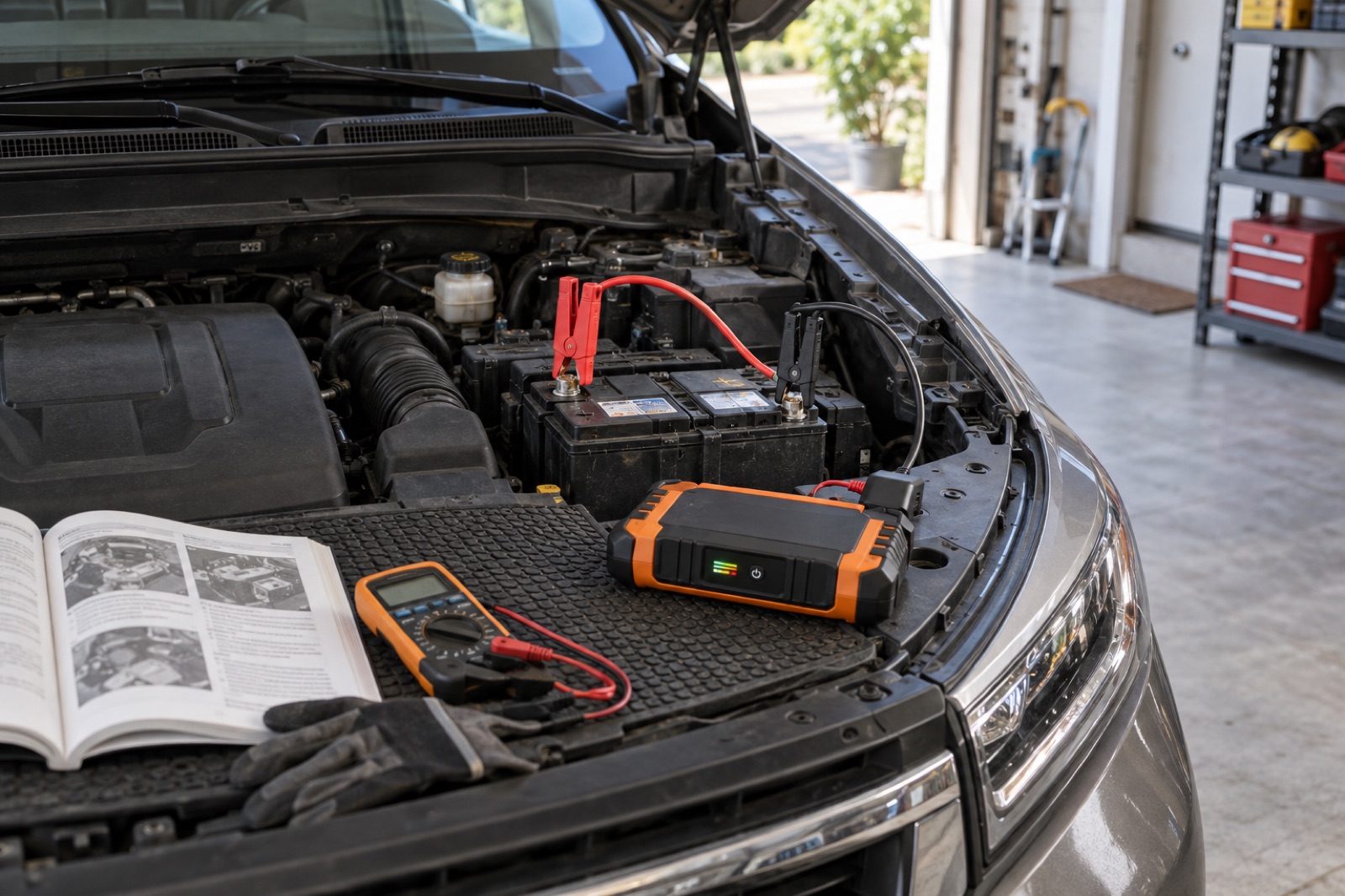
A GP4000 that will not start a vehicle is not automatically defective. The useful sequence is to make the scene safe, confirm a compatible 12V vehicle and approved jump points, inspect the battery and cables, read the smart-clamp indicators, and limit repeated attempts. GOOLOO’s current guidance identifies steady green as a correct connection, steady red with beeping as reversed polarity, and alternating green and red after more than four starts in two minutes as over-start protection.
- Steady green
- GOOLOO says the smart clamps are connected correctly
- Steady red and beeping
- Reverse connection; disconnect and correct polarity
- Green and red blinking
- Over-start protection may have activated after repeated attempts
- Reset step
- Disconnect the jumper-cable plug from the starter, then reassess before reconnecting
- Maintenance
- Recharge every three months and after substantial use
Our view is based on published specifications, manufacturer documentation, and category research. Where we have not performed hands-on testing, we do not imply that we have.
Before troubleshooting
Stop first when the battery, vehicle, or roadside scene looks unsafe
Move away from traffic where possible, set the parking brake, switch off vehicle loads, and follow the vehicle manual. Do not connect a jump pack to a battery that is frozen, cracked, swollen, leaking, smoking, unusually hot, or surrounded by fuel odor. Keep the pack and clamps away from moving belts, fans, and metal tools.
Confirm that the vehicle uses a compatible 12V starting system and identify the manufacturer-approved jump points. Some vehicles use remote terminals or special procedures. A commercial or specialty vehicle may use a different voltage, multiple batteries, or an architecture that a general 12V guide cannot safely cover.
If polarity, battery condition, or the approved connection point is uncertain, stop and use roadside or professional service. Repeatedly pressing start is not a troubleshooting method; it adds heat and can hide the real problem.
- Verify 12V and the approved jump points
- Inspect the battery and clamp insulation
- Keep cables clear of moving parts
- Stop when the scene or procedure is uncertain
Clamp lights and alarms
Treat the smart-clamp indicator as the first diagnostic branch
GOOLOO’s current GP4000 guidance says a steady green light means the clamps are connected correctly. That is permission to continue with the documented sequence, not proof that the battery, starter, engine, or charging system is healthy. Keep the clamps firmly seated on clean approved metal contact points.
A steady red light with beeping indicates reverse connection. Do not try to start the vehicle. Disconnect the clamp system as directed, confirm positive and negative points from the vehicle manual, and reconnect only when polarity is certain.
If green and red blink after more than four starts within two minutes, GOOLOO identifies over-start protection. Disconnect the jumper-cable plug from the GP4000 to reset it, allow the equipment to rest, and investigate the failed starts before another attempt.
Correct connection, no start
A green light narrows the problem—it does not guarantee a successful crank
Check that the GP4000 has adequate charge, the clamp jaws have a secure bite, and the selected points are the vehicle’s approved points. Corrosion, painted metal, loose terminals, inaccessible posts, long cable paths, cold conditions, or an unusually depleted battery can change the result. Follow the current manual if it documents a low-voltage or boost procedure; do not improvise around clamp protections.
Listen to what the vehicle does. No response, rapid clicking, a slow crank, or a normal crank that never starts point toward different vehicle-side problems. A jump pack only supplies starting assistance. It cannot correct a failed starter, poor ground, empty fuel system, immobilizer issue, mechanical fault, or damaged battery.
After the manual’s allowed attempts, stop. Repeated failed starts consume pack energy and create heat. A battery that repeatedly needs a boost should be tested along with the charging and starting systems rather than becoming a routine GP4000 job.
Charging and storage
A pack that sat forgotten may need maintenance before diagnosis
GOOLOO recommends recharging the GP4000 every three months. Recharge sooner after meaningful jump-starting or device charging, and inspect the enclosure, ports, clamps, springs, and cable insulation at the same time. The exact wall charger and accessories can vary by bundle, so use the current manual and compatible charging equipment.
The company lists an operating range of -4°F to 140°F and warns against long-term storage in a parked hot vehicle. Cabin heat can exceed outdoor temperature. Move the pack out of damaging conditions and discontinue use if it becomes swollen, cracked, wet, leaking, unusually hot, or develops an unusual odor.
GOOLOO also says the GP4000 cannot charge other devices while starting a vehicle. Preserve charge for the primary task, then recharge and return the complete pack, smart clamps, and cable to its case.
When to stop
Call for help when the fault is not a simple discharged battery
Stop immediately for reversed polarity that cannot be resolved, damaged cables, visible battery damage, smoke, heat, electrical odor, sparking beyond the normal documented connection behavior, or a vehicle procedure that conflicts with the GP4000 instructions. Do not use an emergency roadside location as the place to learn an unfamiliar special procedure.
Professional help is also appropriate after repeated failed attempts, when the engine cranks normally but will not run, or when the vehicle repeatedly loses charge. The GP4000 is most useful as one maintained part of a broader plan that includes roadside contact information, a light, warning equipment, and a safe waiting location.
Frequently asked questions
What buyers ask about GOOLOO GP4000 Jump Starter
Why is my GOOLOO GP4000 beeping with a red light?
GOOLOO identifies steady red plus beeping as reverse connection. Do not start the vehicle; disconnect and verify the approved positive and negative points before reconnecting.
Why are the GP4000 clamp lights blinking green and red?
GOOLOO says alternating green and red after more than four starts in two minutes indicates over-start protection. Disconnect the jumper-cable plug from the starter to reset, let the system rest, and investigate the failed starts.
Why will the car not start when the clamp light is green?
Steady green indicates correct clamp connection, not a healthy battery or vehicle. Check pack charge, clamp contact, approved jump points, battery condition, weather, and vehicle-side faults, then stop after the documented attempt limit.
How often should I charge the GOOLOO GP4000?
GOOLOO recommends recharging every three months and after substantial use. Inspect the pack, clamps, and cables at the same time.
Can I charge my phone while using the GP4000 to start a vehicle?
GOOLOO states that the GP4000 cannot charge other devices while it is starting a vehicle. Reserve its charge for the start, then recharge the pack afterward.
Primary sources checked
Official documentation used for this guide
Specifications, software, bundles, warranties, and compatibility can change. These primary sources were checked while preparing this page; confirm the current information for the exact model before purchase.
Product links