The short answer
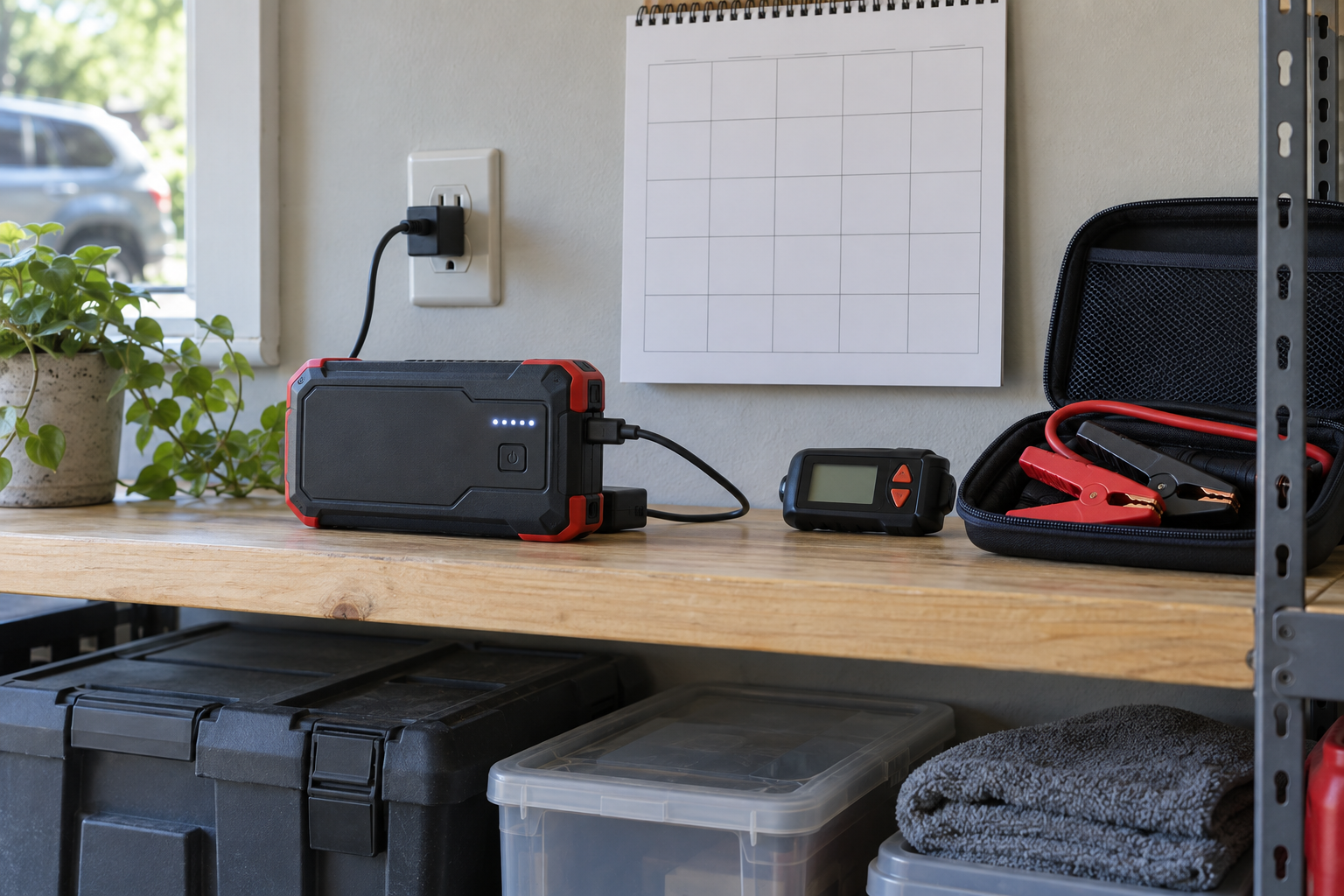
Follow the model-specific manual and use a recurring calendar check so the pack is inspected and charged before weather or travel increases the chance of need.
But the useful answer depends on what you mean by “better.” Better for travel can mean lighter; better at home can mean quieter; better value can mean fewer future accessories. The questions below narrow the definition.
Five questions to ask
Who is this really for?
The clearest matches are seasonal drivers and anyone storing a jump pack for emergencies. That describes use cases, not a universal ranking.
Which specification deserves attention?
Manufacturer instructions override a generic schedule should be verified first. Treat it as a filter, not a promise of overall quality.
What is easy to overlook?
Frequent checks take discipline, but a forgotten lithium pack can lose readiness even when it has never been used. Recurring friction usually matters more than an extra mode used twice a year.
How should alternatives be compared?
Use the same model generation, included accessories, measurement conditions, and seller terms. Otherwise the comparison can look precise while answering the wrong question.
What would make us wait?
Unclear compatibility, unavailable consumables, vague warranty coverage, or a price driven by a bundle you do not need are all good reasons to pause.
Now inspect the ownership details
The purchase is only the first interaction. Map the first month: setup, placement, charging or power, cleaning, storage, software, and replacement parts. A product that adds a small chore every day needs to deliver a benefit just as often.
- Manufacturer instructions override a generic schedule
- Heat and cold can affect storage and performance
- Inspect swelling, damage, ports, clamps, and cables
- Do not charge or use a visibly damaged battery
Our view is based on published specifications, manufacturer documentation, and category research. Where we have not performed hands-on testing, we do not imply that we have.
The deeper read
How often should you recharge a portable jump starter? in context
The follow-up questions become more concrete when the category is examined through four practical lenses.
Installation is part of performance
In a vehicle, a specification cannot be separated from placement. Screen glare, windshield angle, mirror controls, cable routing, camera position, available power, and the driver’s sight line all influence the result. Check that safety systems, airbags, controls, and visibility remain unobstructed. If professional installation is recommended, include it in the budget rather than treating it as an afterthought.
Weather changes the calculation
Heat, cold, vibration, rain, and low light make the car a demanding environment for electronics. Published operating limits and parking-mode requirements matter more than they would on a desk. Review storage-media guidance, battery-protection features, mounting adhesives, and the method used to power equipment while the vehicle is off.
The interface must disappear
A useful driving accessory should reduce decisions once the trip begins. Controls, reconnection, alerts, and display brightness need to be predictable enough that they do not compete for attention. Configure the product while parked, learn how it fails, and know how to restore the basic function without troubleshooting on the road.
Keep evidence in context
Resolution, coverage, and maximum output figures can be meaningful, but conditions shape the result. A larger number cannot guarantee readable night footage, dependable wireless behavior, or faster emergency work. Look for documentation that explains the conditions behind the claim and compare the same operating mode across alternatives.
Turn the guide into a shortlist
A buying guide should reduce the field, not encourage endless comparison. For how often should you recharge a portable jump starter?, start with three non-negotiables: the environment it must fit, the primary task it must complete, and the ownership burden you will accept. Remove every option that fails one of those conditions before looking at premium features. A shortlist of two or three well-matched products is more useful than a ranking of ten products built for different people.
Next, write one sentence for the compromise attached to each finalist. Perhaps the smallest option needs more frequent batches, the wireless option gives up some efficiency, or the higher-output model occupies more room. When the compromise is explicit, the choice becomes personal in a productive way. You are no longer asking which product is best in the abstract; you are deciding which drawback will appear least often in your routine.
Before checkout, confirm the precise model, included accessories, seller identity, regional warranty, delivery and return terms, and the latest manufacturer instructions. Save important compatibility information when it affects the decision. If a safety, electrical, food-contact, charging, installation, or vehicle requirement applies, the current official instructions take priority over a general guide. The last step is permission to wait: uncertainty is a valid reason not to buy yet.
Final answer
Frequent checks take discipline, but a forgotten lithium pack can lose readiness even when it has never been used.
If that compromise is acceptable in your primary use case, the product belongs on the shortlist. If not, a longer feature list will not rescue the fit.
Product links