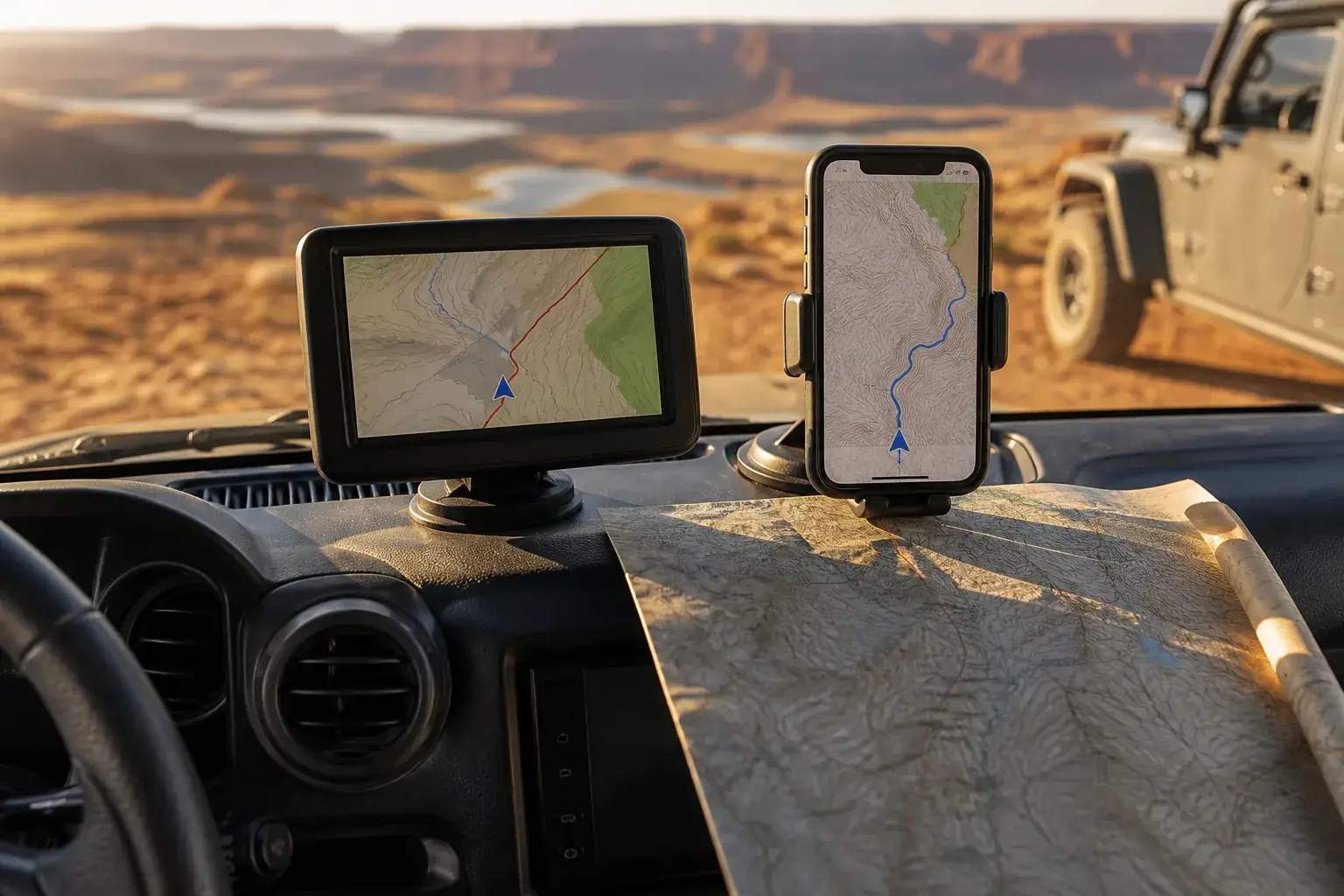
Field note
Picture the moment it has to earn its place.
Imagine the first ten minutes of a wet, dark commute: the car starts, the phone connects, the view is clear, and nothing demands a roadside tutorial. That is the useful starting point for portable gps vs phone navigation: which belongs on your dashboard?: not the brightest claim on the box, but the ordinary moment when fit, reach, noise, speed, or convenience either helps—or gets in the way.
“A phone is simplest for most connected trips; a dedicated GPS can make sense when offline coverage and a fixed interface matter.”
Our view is based on published specifications, manufacturer documentation, and category research. Where we have not performed hands-on testing, we do not imply that we have.
Signals worth noticing
The details that change the experience
- 01Map-update policies vary
Confirm how this works in your exact setup. The specification matters only when it supports the task you repeat most often.
- 02Mount placement affects visibility
Confirm how this works in your exact setup. The specification matters only when it supports the task you repeat most often.
- 03Offline capability should be verified before travel
Confirm how this works in your exact setup. The specification matters only when it supports the task you repeat most often.
Day two matters more than unboxing day
Think past setup. Where will it live? What gets charged, cleaned, routed, updated, emptied, or stored? Those small ownership steps decide whether a product becomes part of the routine. For this category, access and upkeep deserve the same attention as headline performance.
The strongest fit is usually for remote-road travelers and drivers who prefer a dedicated screen. Anyone outside those scenarios should be especially strict about dimensions, compatibility, and return terms.
The deeper read
Portable GPS vs phone navigation in context
A closer observation reveals four ownership details that are easy to miss in a showroom or marketplace listing.
Installation is part of performance
In a vehicle, a specification cannot be separated from placement. Screen glare, windshield angle, mirror controls, cable routing, camera position, available power, and the driver’s sight line all influence the result. Check that safety systems, airbags, controls, and visibility remain unobstructed. If professional installation is recommended, include it in the budget rather than treating it as an afterthought.
Weather changes the calculation
Heat, cold, vibration, rain, and low light make the car a demanding environment for electronics. Published operating limits and parking-mode requirements matter more than they would on a desk. Review storage-media guidance, battery-protection features, mounting adhesives, and the method used to power equipment while the vehicle is off.
The interface must disappear
A useful driving accessory should reduce decisions once the trip begins. Controls, reconnection, alerts, and display brightness need to be predictable enough that they do not compete for attention. Configure the product while parked, learn how it fails, and know how to restore the basic function without troubleshooting on the road.
Keep evidence in context
Resolution, coverage, and maximum output figures can be meaningful, but conditions shape the result. A larger number cannot guarantee readable night footage, dependable wireless behavior, or faster emergency work. Look for documentation that explains the conditions behind the claim and compare the same operating mode across alternatives.
Build a fair comparison
A useful comparison keeps the job constant while the products change. With portable gps vs phone navigation: which belongs on your dashboard?, begin by writing one sentence that describes the routine to improve. Then compare each option at the same capacity, connection state, accessory level, and operating condition wherever possible. If one alternative is judged at maximum performance and another in a battery-saving or shared-power mode, the table may look tidy while the conclusion is misleading.
Separate thresholds from preferences. Compatibility, physical fit, safety requirements, and enough capacity to complete the task are thresholds: an option either clears them or leaves the shortlist. Color, small differences in weight, app extras, and secondary modes are preferences. Do not let a pile of preferences compensate for a failed threshold. This simple rule prevents the candidate with the most checkmarks from winning despite being wrong for the setup.
Finally, compare the complete cost at a normal selling price, not only the most attractive promotion visible today. Include required cables, mounts, cases, consumables, subscriptions, and replacement parts. If the result changes only because one item is temporarily discounted, record both conclusions. The better long-term choice should remain understandable after the sale ends.
Editor’s bottom line
Dedicated hardware adds cost and another device, while phone navigation consumes battery and attention.
That is not a reason to dismiss the product. It is the tension to resolve before buying. If the benefit appears in your daily routine and the compromise does not, the choice has a sound foundation.