Field note
Picture the moment it has to earn its place.
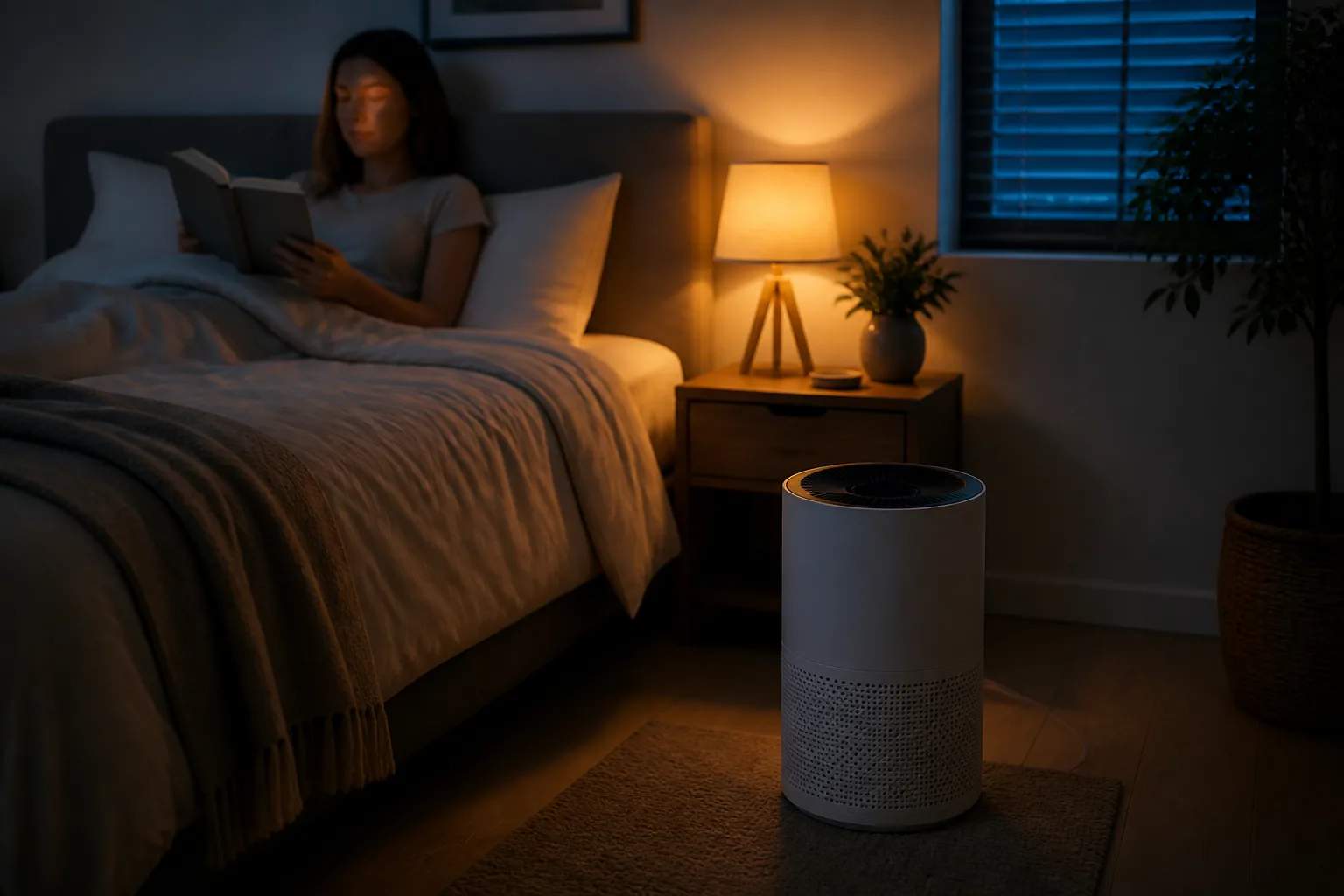
It is a busy weeknight: counter space is limited, cleanup is waiting, and the appliance needs to make the routine shorter rather than more elaborate. That is the useful starting point for bedroom air purifiers: size for quiet, not just maximum airflow: not the brightest claim on the box, but the ordinary moment when fit, reach, noise, speed, or convenience either helps—or gets in the way.
“Choose a unit that can meet the room’s needs without living at its loudest setting.”
Our view is based on published specifications, manufacturer documentation, and category research. Where we have not performed hands-on testing, we do not imply that we have.
Signals worth noticing
The details that change the experience
- 01Coverage claims use different assumptions
Confirm how this works in your exact setup. The specification matters only when it supports the task you repeat most often.
- 02Placement affects airflow
Confirm how this works in your exact setup. The specification matters only when it supports the task you repeat most often.
- 03Air purifiers do not remove every pollutant source
Confirm how this works in your exact setup. The specification matters only when it supports the task you repeat most often.
Day two matters more than unboxing day
Think past setup. Where will it live? What gets charged, cleaned, routed, updated, emptied, or stored? Those small ownership steps decide whether a product becomes part of the routine. For this category, access and upkeep deserve the same attention as headline performance.
The strongest fit is usually for bedrooms and small living spaces and people willing to maintain filters. Anyone outside those scenarios should be especially strict about dimensions, compatibility, and return terms.
The deeper read
Bedroom air purifiers in context
A closer observation reveals four ownership details that are easy to miss in a showroom or marketplace listing.
Measure the working space
Counter width is only the first dimension. Doors, baskets, lids, water tanks, cords, vents, handles, and removable parts all need room during operation and cleaning. Mark the full working footprint with tape, then check whether nearby cabinets, walls, heat-sensitive surfaces, and outlets allow the manufacturer’s required clearance.
Cleaning determines frequency of use
An appliance can save ten minutes during operation and give them back during cleanup. Look at the number of removable parts, narrow channels, coatings, drainage, filter access, drying needs, and whether components are dishwasher-safe under the current instructions. The easiest routine is the one you can complete immediately after use.
Capacity claims need translation
Outer volume, basket volume, water-tank size, room coverage, and production-per-day figures do not always describe the usable amount in one cycle. Translate the claim into meals, cups, rooms, bins, or cleaning sessions for your household. A smaller machine used once can be more efficient than a compact machine that needs repeated batches.
Ownership continues after purchase
Filters, descaling products, bags, brushes, seals, replacement baskets, and warranty service can shape long-term value. Check whether consumables are widely available and whether the machine can be maintained without unusual tools. A low purchase price is less persuasive when a proprietary part is costly or difficult to source.
How to read this assessment
A research-led review is most useful when it draws a firm boundary around the evidence. For bedroom air purifiers: size for quiet, not just maximum airflow, we can examine documented design, stated compatibility, intended use, ownership requirements, and how those pieces compare with the norms of the category. We cannot turn those sources into invented battery tests, sound measurements, cleaning results, or first-person impressions. That limitation does not make the exercise empty; it changes the question from “Did we enjoy it?” to “Does the documented proposition make sense for this buyer?”
Use the conclusion as a shortlist decision, then verify the variables that depend on an individual environment. A vehicle angle, room shape, phone case, counter layout, hand size, operating system, or local seller can change the outcome. Look for independent testing when a measurable performance claim is central, and give more weight to reviews that show methods and comparison conditions. Confidence should rise with transparent evidence, not with the intensity of the language.
If the product reaches your shortlist, plan a deliberate first week. Confirm every included piece, follow the official setup guidance, and test the functions tied to your main use case while the return period is open. Keep packaging until fit and compatibility are settled. A good review helps you form the right test; it should never ask you to ignore your own result.
Editor’s bottom line
A lower purchase price can be offset by filter cost and availability over time.
That is not a reason to dismiss the product. It is the tension to resolve before buying. If the benefit appears in your daily routine and the compromise does not, the choice has a sound foundation.