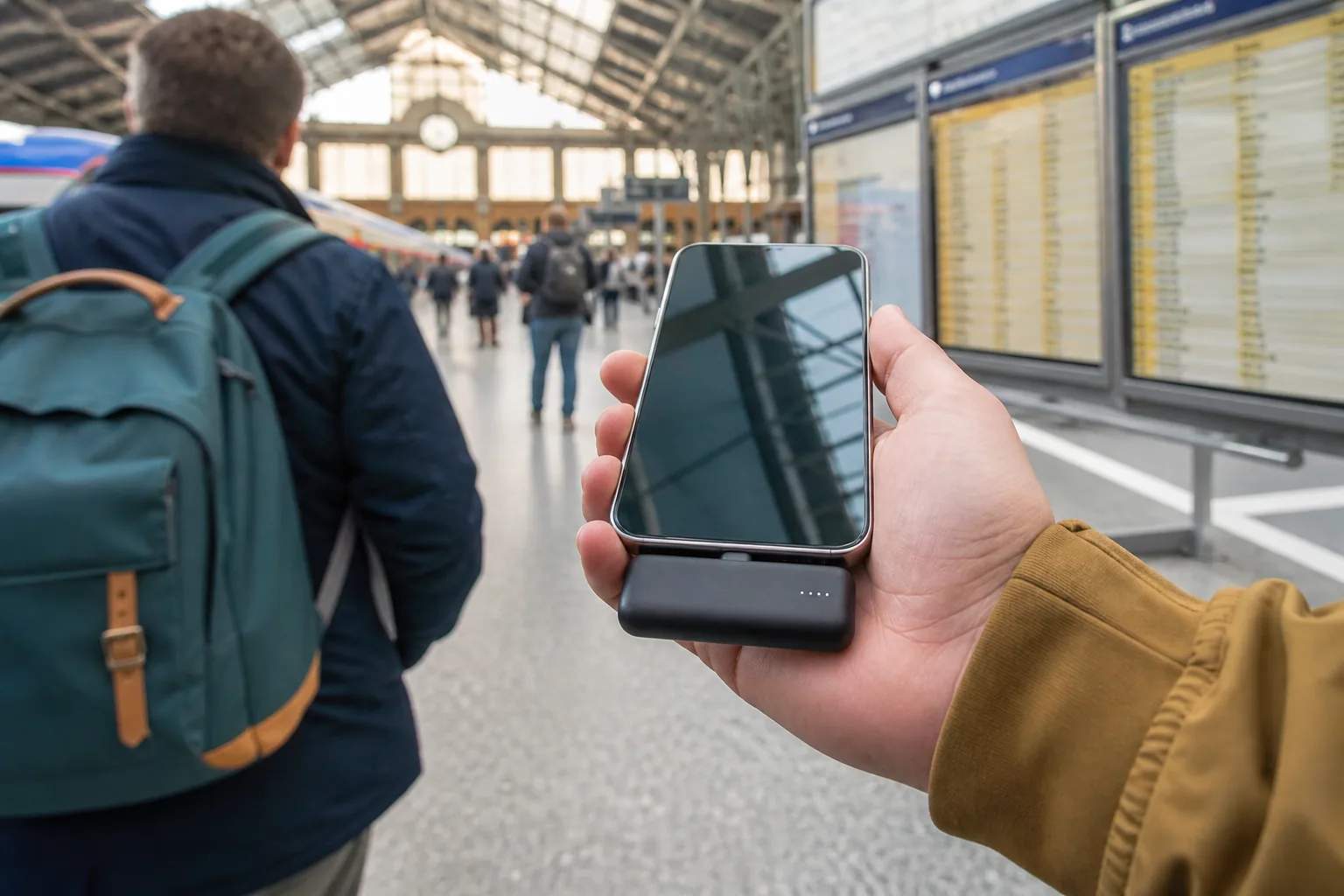
The short answer
These miniature packs suit quick top-ups when minimal carry matters more than total capacity.
But the useful answer depends on what you mean by “better.” Better for travel can mean lighter; better at home can mean quieter; better value can mean fewer future accessories. The questions below narrow the definition.
Five questions to ask
Who is this really for?
The clearest matches are light travelers and emergency phone top-ups. That describes use cases, not a universal ranking.
Which specification deserves attention?
Check connector orientation should be verified first. Treat it as a filter, not a promise of overall quality.
What is easy to overlook?
Their direct connector can feel awkward while using the phone and may not clear every case. Recurring friction usually matters more than an extra mode used twice a year.
How should alternatives be compared?
Use the same model generation, included accessories, measurement conditions, and seller terms. Otherwise the comparison can look precise while answering the wrong question.
What would make us wait?
Unclear compatibility, unavailable consumables, vague warranty coverage, or a price driven by a bundle you do not need are all good reasons to pause.
Now inspect the ownership details
The purchase is only the first interaction. Map the first month: setup, placement, charging or power, cleaning, storage, software, and replacement parts. A product that adds a small chore every day needs to deliver a benefit just as often.
- Check connector orientation
- Confirm case clearance
- Expect less endurance than larger packs
Our view is based on published specifications, manufacturer documentation, and category research. Where we have not performed hands-on testing, we do not imply that we have.
The deeper read
Plug-in USB-C power banks in context
The follow-up questions become more concrete when the category is examined through four practical lenses.
Capacity is not energy delivered
Charging involves conversion losses, device limits, cable limits, and heat. A capacity printed on a battery does not translate directly into the same amount reaching a phone or laptop. Use it to compare broadly similar products, then check supported output standards, port behavior, and whether multiple devices share the available power.
Carry comfort is a real feature
A travel product is handled more often than it is admired. Weight, thickness, connector position, cable storage, grip, and balance can matter more than an extra mode. Sketch the actual carry system: pocket, purse, backpack, airport tray, café table, or bedside outlet. The right design should fit that sequence without creating another loose object to manage.
Heat and batteries deserve respect
Lithium-powered gear should be used, charged, stored, and transported according to current manufacturer guidance. Stop using damaged or swollen batteries. Confirm airline rules before travel, keep ports protected from debris, and use cables rated for the required power. Fast charging is valuable only when the whole chain supports it safely.
Ecosystems can narrow the choice
Magnetic alignment, finding networks, companion apps, connector types, and operating-system features may tie a product to one device family. That can make everyday use smoother, but it also reduces flexibility when a phone or laptop changes. Decide whether the convenience is worth the lock-in before treating ecosystem integration as an automatic advantage.
How to read this assessment
A research-led review is most useful when it draws a firm boundary around the evidence. For plug-in usb-c power banks: tiny backup, specific audience, we can examine documented design, stated compatibility, intended use, ownership requirements, and how those pieces compare with the norms of the category. We cannot turn those sources into invented battery tests, sound measurements, cleaning results, or first-person impressions. That limitation does not make the exercise empty; it changes the question from “Did we enjoy it?” to “Does the documented proposition make sense for this buyer?”
Use the conclusion as a shortlist decision, then verify the variables that depend on an individual environment. A vehicle angle, room shape, phone case, counter layout, hand size, operating system, or local seller can change the outcome. Look for independent testing when a measurable performance claim is central, and give more weight to reviews that show methods and comparison conditions. Confidence should rise with transparent evidence, not with the intensity of the language.
If the product reaches your shortlist, plan a deliberate first week. Confirm every included piece, follow the official setup guidance, and test the functions tied to your main use case while the return period is open. Keep packaging until fit and compatibility are settled. A good review helps you form the right test; it should never ask you to ignore your own result.
Final answer
Their direct connector can feel awkward while using the phone and may not clear every case.
If that compromise is acceptable in your primary use case, the product belongs on the shortlist. If not, a longer feature list will not rescue the fit.
Product links